Automation & the Next Industrial Revolution
MTorres offers futuristic thinking about automation and long-term strategic planning in the aerospace industry.
By Jennifer Ferrero
Aerospace manufacturing is a complex, innovative field that requires integrating advanced engineering, materials science, and precision manufacturing processes. This industry thrives on the vision of individuals who not only execute sophisticated designs and work with cutting-edge materials but also consider broader implications for production systems and global supply chains.
MTorres, headquartered in Spain with an additional location in Lynnwood, Washington, exemplifies this multidimensional approach. At its helm is President Eduardo Torres, a manufacturing thought leader who considers not only the immediate demands of aerospace manufacturing but also envisions the transformative possibilities of automation for factory systems over the next several decades.
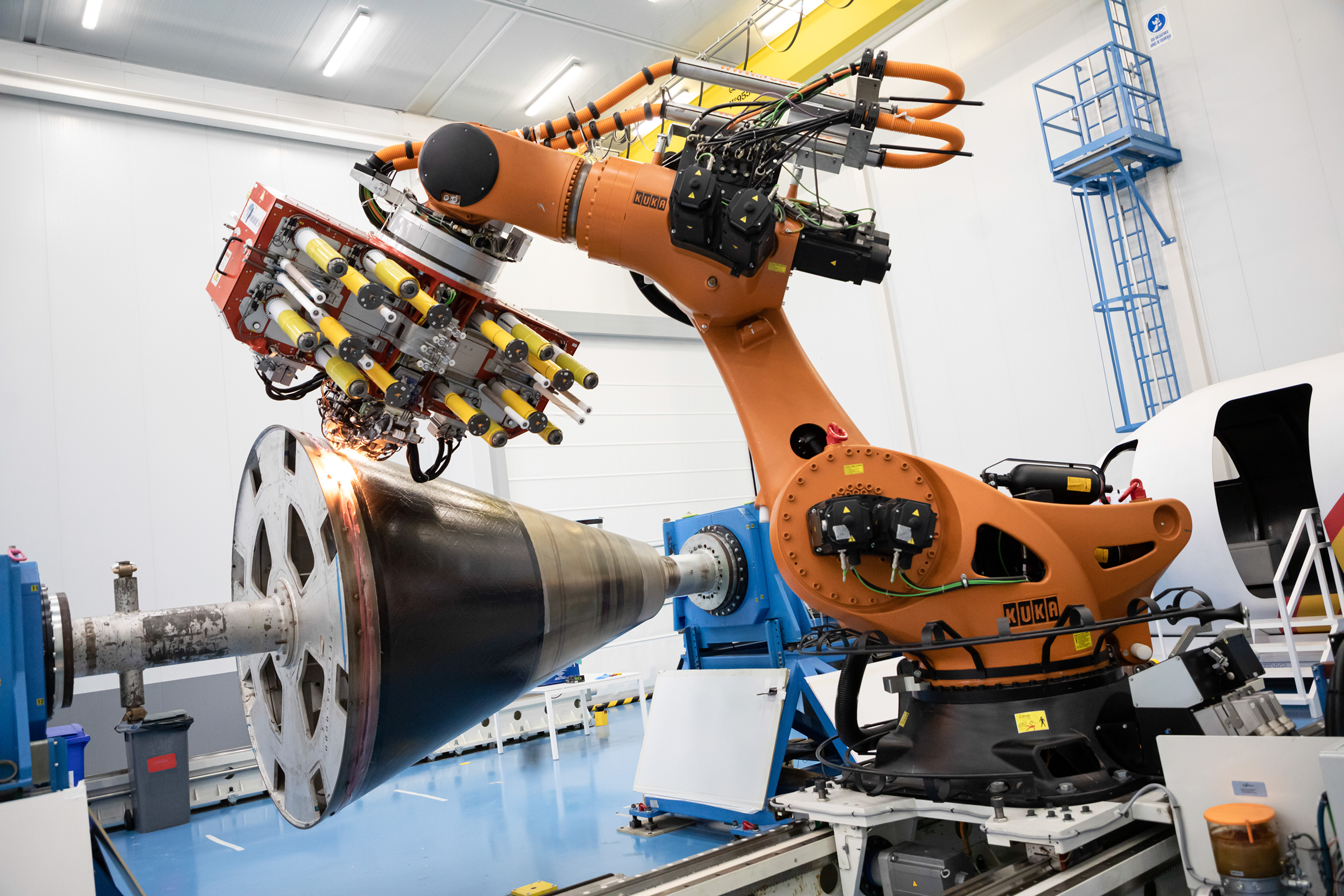
Torres served as a panel speaker at the Pacific Northwest Aerospace Alliance’s February conference on Automation in Aerospace and shared his thoughts on longevity in the aerospace value chain. Torres said that for years, manufacturers have operated under the philosophy that you supply the product or service and tell the customer, “Call me if you need anything.” He said, following COVID, which had a dramatic impact on orders in the aerospace industry, a more sustainable approach is to build long-term partnerships with customers. He said they like to be involved in the conception of a new aircraft so they can offer strategic advice to ensure the project is efficient, stable, and repeatable. He said this model will lead to ongoing projects 35 years into the future, rather than just five or 10.
During the pandemic, MTorres faced a difficult decision: to sell its facility in Everett, Washington, due to a lack of orders. Torres said, “It was very sad, for a while; there was an absence of orders for an extended period, which caused us to make difficult industrial decisions.” The closure caused them to rethink their core competencies. “We’ve been able to bounce back with greater strategic clarity and a stronger focus on products, industrial reliability, and long-term performance.”
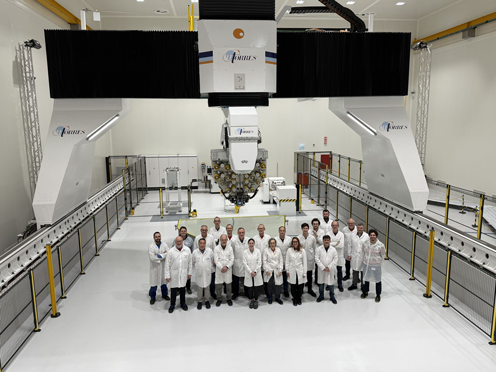
Today, MTorres employs 700 and maintains two R&D and production facilities in Spain and an engineering services facility in Lynnwood, Washington. MTorres is a global company with six centers for commercial and technical support in Europe, America, and Asia, and offices that provide technical assistance (https://mtorres.es/en). Other facilities are in Brazil and Germany. They offer advanced assembly tooling solutions for the aerospace industry, including equipment, software, and process flow assessments. They also highlighted that in Lynnwood, they manage U.S. commercial functions and technical support services, which reinforces their operational proximity to customers in North America.
Tim Hanson, key account manager, has been with the company for nine years and works closely with Boeing. He said the core company competencies are solving customer problems. They enjoy the ownership/partnership aspect of working closely with customers and feel joint pride with the OEM on the project. Hanson has an engineering degree and understands the technical aspects of discussions with his fellow engineers and the customer. He also sees his role as a communicator or translator of ideas. He said that, between different countries, there can be a language gap, but stated broadly that he is good at solving people-related communication challenges. “Often there is a communication gap, which can be language, time zone, and email interpretation.” With his depth of experience, he interprets projects and quickly resolves any communication issues. “I can redirect the team and provide Boeing with the needed answers,” he said.
The Director of Engineering and Program Management for U.S. Operations is Bret Rodeheaver, who has eight years of tenure with the company. Rodeheaver said they make difficult projects look easy. They do this through innovation and agility. He explained, “What’s been exciting and interesting is to solve problems that our customers bring to us; we make complex projects look easy with high levels of automation; and repeatable, consistent, and reliable systems; that’s what we do. Figuring out how to do it, being agile enough to implement on the schedule, is what we are good at.”
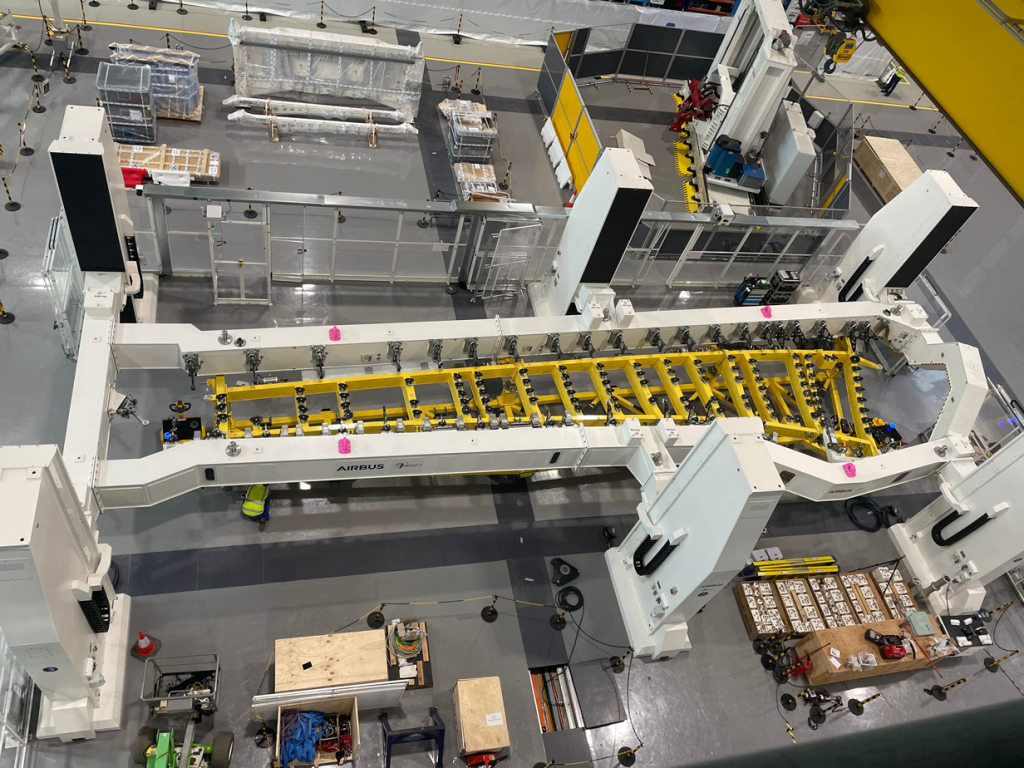
At their Lynnwood facility, which employs about 20 engineers, they focus on three product lines in their aerospace division: lamination equipment (AFPA ATL), milling and drilling (removing metal or deposits), and automated/industrial systems. He said they concentrate on “anything that holds or puts aircraft together and sub-components. The facility is focused on automated industrial systems in North America.” They manage all aspects of program management in the engineering supply chain, installation, service, and support. Once that’s in place, they support those products. Their service includes software developed for an automated assembly line; machines require automation and programming.
Rodeheaver said, “We offer a factory 4.0 solution; the core intention is to collect metadata and deliver it to the client so they can choose to integrate it into other systems.”
In the aerospace industry, process engineers like to be involved from the beginning of a project. “We can start very early in the process,” Rodeheaver shared. He said that allows them to ask how they want to build an aircraft while assessing skill sets and experience across the organization.
With this approach, they review the factory layout, key equipment, production rates and throughputs, financial analyses and budgets, and offer joint engineering with the process. He added, “We prefer this because we create a solution that will work for them and is viable in the industry, over specifications that may not be easy to meet.”
Hanson reiterated this thinking, “Depending on where the customer is in the lifecycle, we can get involved. He said that when customers launch a new aircraft product, such as commercial aerospace or rotorcraft, they start at the beginning of the lifecycle. “We can do studies, plant layout, recommend how much equipment you need, what the process flow will look like, how much staffing is needed, and provide an estimate of costs.” Their thought process is that, traditionally, an automation project concluded with installation and commissioning. Today, they understand that moment marks the true beginning of its industrial life, designed to work alongside people, reinforce its technical capabilities, and ensure stable, safe production environments over time. They have tools that provide a visual summary of the proposed factory. He calls this white-space engineering; they ask, “Where can we apply automation?”
Torres said this shift in thinking is a cultural shift from traditional manufacturing to automation over the past few decades. “Many of today’s difficulties stem from designs that were not conceived with automation in mind: complex tolerances, geometric variability, and artisanal processes that are difficult to standardize. The question is no longer only what can be automated, but what should be designed differently so that automation becomes possible, efficient, and justifiable.”
He shared that past solutions have been isolating rather than taking a lifecycle perspective on the product. The value-added service is through a partnership with the customer: “We are together with you, it’s about trust, working together.”
He outlined that the role of the aerospace supplier has evolved from design and installation of equipment to providing “judgment, stability, and a long-term relationship.” He wants to ensure that automation remains effective and relevant over time and is part of a broader industrial infrastructure. But he noted that all parties involved, the manufacturers, suppliers, and facility teams, “share responsibility for sustained performance.”
For those concerned about how automation and AI might impact manufacturing, Torres drew a parallel to the Industrial Revolution, observing that each introduction of a disruptive technology generated widespread anxieties — including fears about job security, management practices, and understanding new systems. He emphasized that, while automation may change workflows and roles, historical fears have often given way to adaptation and the emergence of new opportunities. Torres argued that, despite technological advancements, the necessity for human expertise remains central: designers, technicians, engineers, and other professionals will continue to play essential roles within the factory environment.
“We were seeing things as solutions that were isolating; what we are now seeing is a lifecycle as a whole thing.” The focus is now on the value chain, the whole links; we want to be present in the whole process from the beginning, the design phase to the very end; a full life cycle of the service/product, not isolated. The value added is for customers through partnerships. He added, “We are together with you; it’s about trust, working together. Ultimately, the value does not lie in the machine itself, but in its behavior over the years. And that requires a different way of collaborating.”
Regarding governance of automation, Torres said there are many questions about “Who answers when an automated system makes a decision within complex tolerances? How is a process validated when part of the judgment is embedded in software, sensors, and algorithms? What does ‘experience’ mean when it no longer resides solely in people, but also in models, rules, and trained systems?” He said the questions aren’t futuristic as they are already being asked today.
MTorres plans, designs, and delivers complex manufacturing lines and complete production plants, integrating advanced technologies and providing ongoing support to ensure efficient operations and high customer satisfaction. Torres concluded, “Decisions cannot be delegated or postponed without cost. Automation is not acceleration; it is stabilization. It does not replace people; it protects the system from its own fragility, derived from excessive dependence on specific individuals, undocumented knowledge, and non-repeatable processes.” He said automation cannot be delayed: “It is an industrial responsibility that must be assumed from the very beginning of each program.”