Boeing’s Washington-Built P-8A Poseidon Strengthens German Navy’s Global Maritime Patrol Capabilities
As the German Navy welcomes its first P-8A Poseidon, a new chapter begins in global maritime security and allied interoperability.
By The Boeing Company
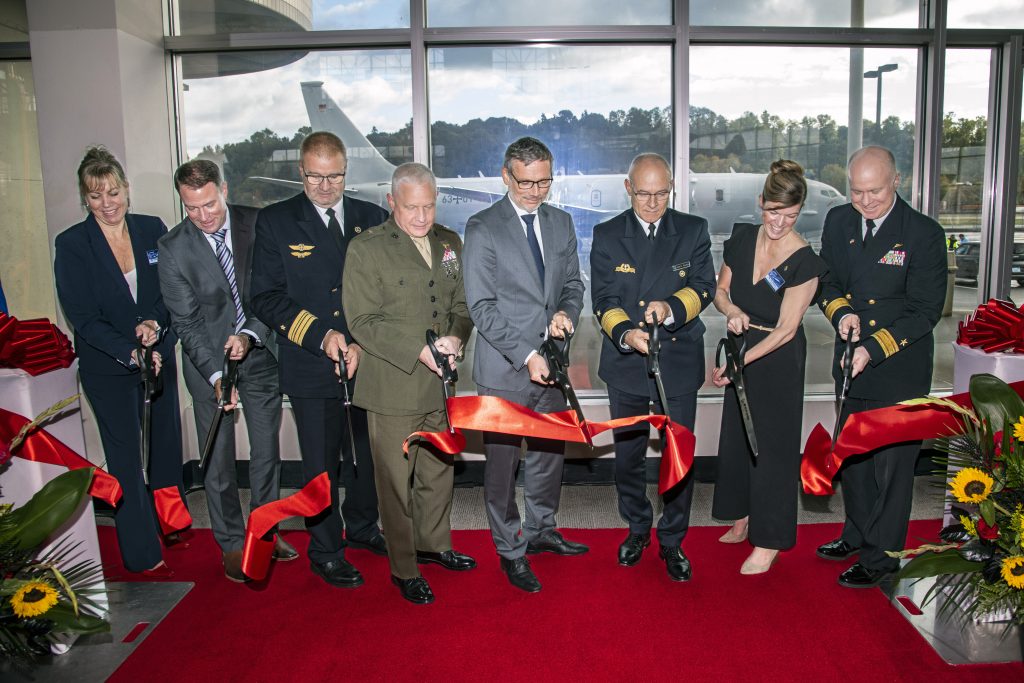
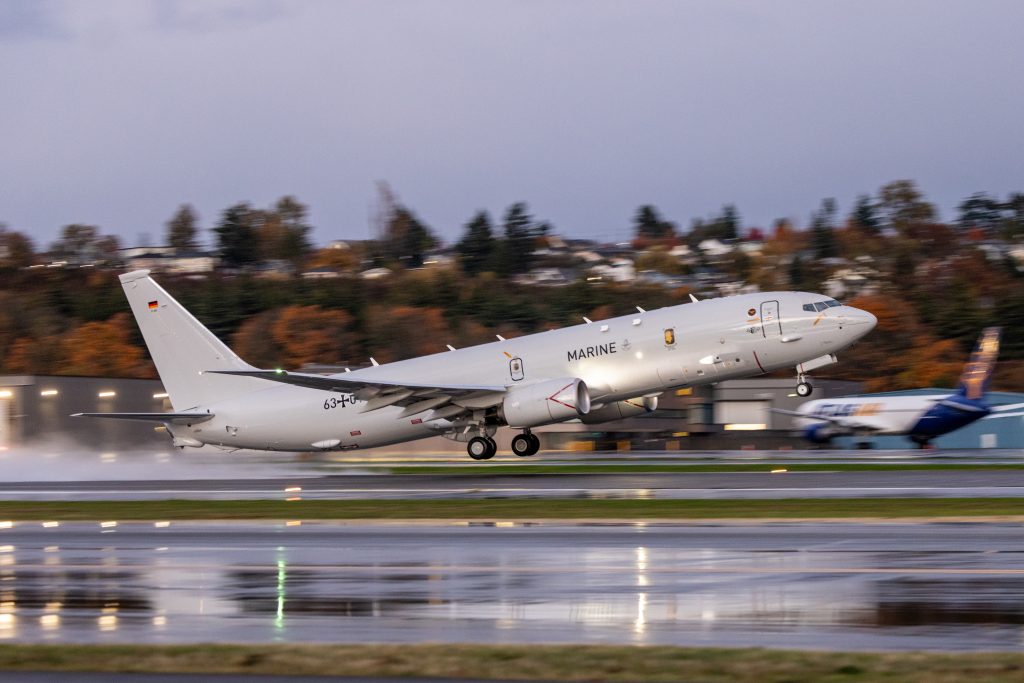
The German Navy recently celebrated the entry into service of its first of eight Washington-built P-8A Poseidon maritime patrol aircraft during a ceremony at Nordholz Naval Air Base in Northern Germany near the North Sea. This new fleet will replace Germany’s aging P-3C Orion aircraft and usher in a new era of advanced maritime surveillance and defense.
“With the arrival of the P-8A Poseidon, the German Navy has gained a new ‘flying guardian,’” said Vice Admiral Jan Christian Kaack, inspector of the German Navy. “This decisive step in our fleet modernization represents a quantum leap in range, sensor technology, and mission duration, perfectly aligned with our strategic direction.”
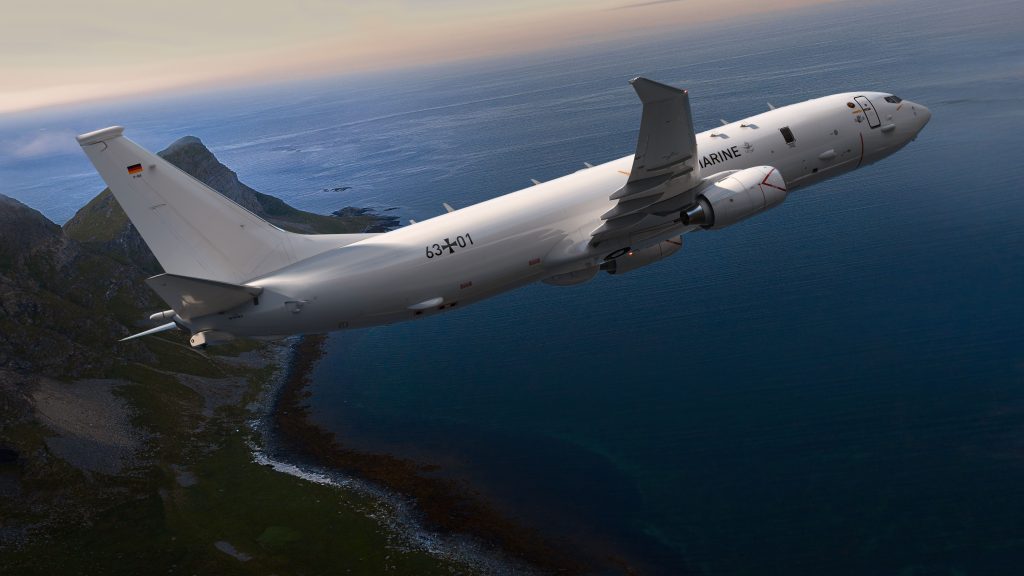
The P-8A’s introduction marks a significant milestone in modernizing Germany’s maritime patrol capabilities. The fleet will conduct anti-submarine and anti-surface warfare, intelligence, surveillance, reconnaissance, humanitarian, and search-and-rescue missions across the North Atlantic, Baltic Sea, and beyond.
“The P-8A will enhance our capabilities in maritime reconnaissance, global surveillance, and in detecting and combating enemy submarines,” Vice Admiral Kaack added. “These are key tasks for protecting Germany at sea and safeguarding its people at home. It is essential for us to become part of a strong global network with partners including the U.S., Australia, South Korea, India and Norway.”
Germany joins the United States, Australia, India, New Zealand, Norway, the Republic of Korea, and the United Kingdom as P-8 operators. With the U.S. Navy operating 125 P-8As and Canada poised to become the ninth operator, five NATO members currently have P-8s on contract.
“With more than 170 P-8s protecting seas and securing borders for eight operators and counting, the German Navy is joining a global community that offers the best solution for maximum interoperability worldwide,” said Tory Peterson, vice president and program manager for the P-8 program.
The P-8A can fly up to 41,000 feet (12,497 meters) at speeds up to 490 knots. Equipped with an in-flight refueling system, it can conduct extended patrols over vast ocean areas, supporting both military and humanitarian missions.
Maximizing Aircraft Availability
Boeing, in partnership with ESG Elektroniksystem- und Logistik-GmbH and Lufthansa Technik Defense, will provide systems integration, maintenance, training, and in-country sustainment to maximize aircraft availability throughout the P-8A fleet’s lifecycle in Germany. This partnership builds on a 2021 industrial framework designating Boeing and its partners as the sustainment team for the German P-8A program.
Washington State: The Heart of Boeing’s Commercial Derivative Defense Production
The P-8A Poseidon is part of Boeing Defense, Space & Security’s (BDS) Mobility, Surveillance & Bombers (MS&B) division, headquartered in Seattle. This division includes several aircraft built or modified in the Pacific Northwest, underscoring Washington State’s critical role in national and global defense.
Other key defense aircraft include the KC-46 Pegasus, a multi-mission aerial refueler produced in Everett; the E-7A Wedgetail Airborne Early Warning & Control aircraft produced in Renton and the E-3 AWACS, originally designed and built in the region with ongoing modifications.
These defense aircraft share commercial airframe designs, leveraging proven commercial platforms to deliver production efficiencies and lifecycle sustainment advantages. This approach ensures Boeing’s military customers receive purpose-built, mission-ready aircraft with the reliability of commercial derivatives.
Additionally, Boeing’s MS&B portfolio also includes the B-52 Stratofortress, a long-range bomber originally built in Seattle, as well as the “Air Force One” aircraft that carry the President of the United States — VC-25A, and its next-generation replacement, VC-25B. These executive fleet aircraft are based on 747 airframes that were also built in Everett.
P-8 Success Depends on Supply Chain
The P-8 program’s success depends on a vast and diverse supply chain, with more than 400 suppliers spanning 42 states and multiple countries worldwide. Many of these suppliers are based right here in Washington, providing critical components, systems, and services that enable the P-8 to meet the highest standards of performance and reliability. This extensive network of suppliers is essential — without their expertise and dedication, the P-8 program simply could not deliver the advanced capabilities demanded by its global customer base.