By Joanna Boatwright — Washington State Department of Commerce, International Trade Specialist
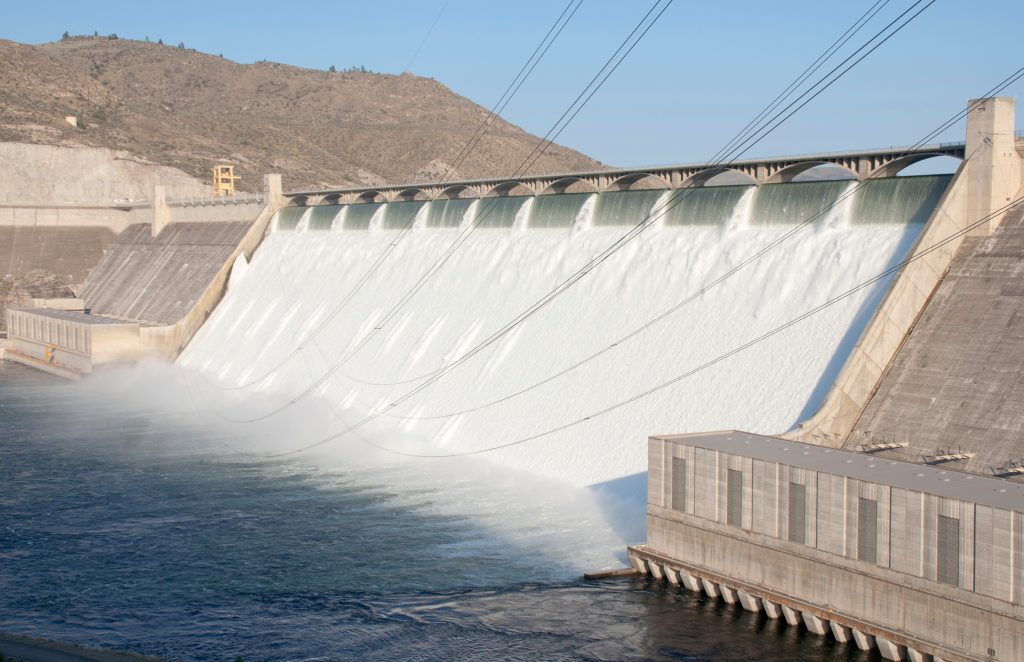
Nearly a century ago, new hydroelectric dams spurred jobs and poured much-needed irrigation water throughout arid Eastern and Central Washington, helping propel Washington State out of the Great Depression.
Hydropower also fueled the manufacturing facilities that produced aluminum, the essential component of aircraft manufacturing at Boeing in Seattle during World War II. President Truman said that the war would have been almost impossible to win without the power generated by the Grand Coulee Dam and the airplanes it helped build.
Today, roughly half of the state runs on hydropower; other forms of energy, including new energy sources, round out our power grid. Wind power, for example, represents about 17% of the region’s generating capacity, and it continues to grow. Washington is paving the way for a new generation of transportation that will run on hydrogen, electricity and biofuels.
This reflects our statewide goal to be 100% reliant on non-carbon-emitting energy by 2045. This value and policy goal is good for both sustainability and job creation.
A 2024 Clean Jobs America report by E2 found that the clean energy sector accounted for 40% of all energy jobs in 2023 and one out of 30 of all net-new jobs in the U.S. While the policy landscape has changed since then, the 2025 Clean Energy Jobs Report found the industry still outpaces all other workforce sectors for growth.
The Clean Investment Monitor (CIM) quantifies these investments in communities across America, including in Washington. CIM has found some star performers making a lasting contribution to the state’s sustainable future.
Group14: Building the world’s largest advanced silicon battery materials factory
Companies across the state are making significant investments in clean energy. One standout example is Group14 Technologies. In 2022, the company received a Commerce Clean Energy Fund grant to support the development of its signature silicon battery material. New battery technologies are critical to the electrification of key sectors, and Group14’s silicon battery material, SCC55®, is a highly versatile material, designed as a drop-in replacement for graphite in today’s rechargeable lithium-ion batteries. It boosts energy density, handles extreme charge-discharge cycles, and delivers high performance across multiple battery formats and chemistries, making energy storage solutions more accessible and efficient in any industry.
“Silicon batteries provide 50% more energy [vs. traditional models] and charge in minutes vs. hours — it’s critical to have that energy density for the range requirements of electric aircraft,” Luebbe explained, in a July 2025 interview with Jessica Fisher, the editor of podcast “The FLY Report.” “If your vehicle is, for instance, at a 60-mile range, you can just drop in silicon batteries and now you’re at 90 miles, just by changing battery cells out in the pack. SCC55 is a drop-in replacement for the graphite used in traditional lithium-ion batteries.”
Group14 currently produces SCC55 for an array of applications at its Woodinville factory, including electric aircraft. In aerospace, its materials are found in batteries for eVOTLs and uncrewed aerial vehicles (UAVs). The battery materials enable extreme bursts of power, which are required for aircraft takeoff and landings.
Group14 is growing in Washington State. It is building a new battery active materials (BAM-2) factory in Moses Lake, which expands the company’s commercial-scale manufacturing capacity. The new Moses Lake factory is slated for completion in 2026 and is expected to create up to 200 jobs in the area.
Group14 also partners with several community-based organizations to drive local job creation, support upskilling educational opportunities, and ultimately strengthen the domestic supply chain to improve global competitiveness for U.S. battery manufacturing.
Visionary businesses like Group14 are contributing to a sustainable, low-to-zero emissions future. Plenty of great partners share a similar vision and are eager to collaborate on an exploration of new technologies, products, processes, and markets for sustainable, clean energy.
Other emerging opportunities in Washington:
Sustainable Aviation Fuel:
Several new facilities are working on producing sustainable aviation fuel (SAF) at scale. To support SAF production, Commerce awarded $1.5 million to SkyNRG Americas in Walla Walla. The state legislature is also helping streamline permitting and environmental reviews for plant construction, making Washington a friendly space for this this growing industry.
Electric Aircraft:
The electrification of commuter and corporate aircraft is another exciting opportunity. Building on the state’s century-long domination of U.S. aerospace, new players are coming to market, such as Everett-based magniX. Their electric motors power commuter aircraft, currently in use by British Columbia-based Harbour Air, with scheduled seaplane departures from Lake Union in Seattle.
Power Production:
Disconnecting from fossil fuels requires new ideas in power production. Solar, biomass, wind and tidal energy systems are already part of the state’s growing clean energy portfolio. Increased battery production and grid management technologies are also moving from the drawing board to the factory floor.
A 2024 report by real estate technology firm ProptechOS ranked Seattle as the “smartest” city in the U.S. based on its infrastructure, sustainability, and tech job market. Technology infrastructure, connectivity and our strong tech job market round out the evaluation.
People across the world benefit from innovation that started in Washington, and clean energy is the next horizon.
We intend to ensure that future energy production is clean and inclusive. A sea change in how Washington thinks about, produces and manages power will provide new opportunities for people and communities across the state to enjoy clean, sustainable energy for generations to come.