Masic Industries of Clackamas, Oregon, provides coating technologies with an eye on the future.
By Jennifer Ferrero
If necessity is the mother of invention, adaptation is the future of manufacturing. Masic Industries of Clackamas, Oregon, has been in business for over 77 years. In the last calendar year, they produced over one million pieces in their 16,000-square-foot facility. The fourth-generation business was started in the 1940s by the grandfather of Chris Sicilia, the current CEO. Sicilia has been with the company for 35 years and is keen on proactive adaptation.
Sicilia’s parents operated the enterprise before him, and now he, his younger brother, and three of his children run it. He said that one thing that makes the company unique, aside from the family-owned component, is its employee diversity. On their website, the predominant language is English, with translations into Vietnamese and Spanish. Sicilia noted that when they brought on a quality manager, they implemented many improvements, including translating internal documentation into Vietnamese and Spanish. Adapting to different languages was an effort to improve internal communication and employee retention. “All shop instructions, statements, and other materials are available in three languages. A lot of different cultures collide,” he said regarding the importance of embracing diversity.
According to Sicilia, they offer their 42 employees a family-oriented environment with picnics and lunches. “We have an extremely low turnover; most of our crew has been here five to 20-plus years. There are many different nationalities, and I think that reassures us we’re doing something right for employees. They aren’t all engineers or highly trained people, but we have a good retention rate, with extended family and friends. The culture at Masic Industries offers a good place to work,” he said.
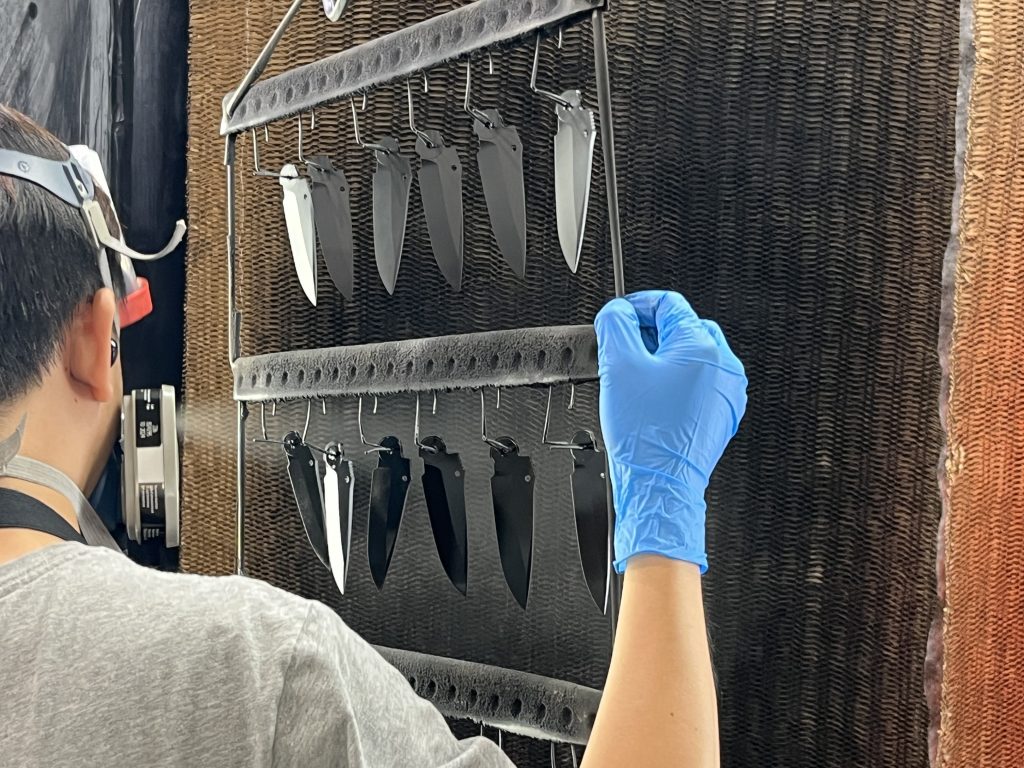
The business of today is very different from what it was before Sicilia and his brother took over. He shared that the business was focused on electroplating for much of its history. When their parents transitioned the business to them, they took a major gamble and left that practice, one of their primary services. “When my parents retired, we were a large electroplating and finishing shop. We knew nothing about what our parents did as far as services.” But he knew that electroplating posed many environmental concerns, including the generation of hazardous waste. “We laid out a blueprint of service steps, made them less environmentally impactful, and brought in powder coating.” They are still asked about electroplating, but he explained, “There’s a lot of potential liability. The rules and governing of those processes and chemicals — there’s a whole lot of static — we didn’t want to deal with anymore.” So they adapted and reinvented the company. They even brought on a partner and changed the name to Masic Industries. At the end of the day, Sicilia said everything the company does is customer driven.
As of today, Sicilia said they offer, “Coatings without failure; we are on a run right now, two-and-a-half years without a customer return. The quality system is very robust, and we have a very good track record with complex work.”
According to their website masicindustries.com, the business now offers coating specialties, including thin-film ceramic coatings, Physical Vapor Deposition (PVD), Diamond-Like Carbon Coating (DLC), and powder coating. “PVD (Physical Vapor Deposition) is a process in which a material transitions from a condensed phase to a vapor phase and then back to a thin-film condensed phase. DLC is an example of a thin-film coating deposited using a PE-CVD (Plasma-Enhanced Chemical Vapor Deposition) process.”
Senior Account Manager Todd Cook was initially hired to help implement an ERP system and now works with customers. He is their primary contact for a telecommunications company that provides coatings for satellites. They have also worked in the cutlery industry for Benchmade Cutlery, coating 100,000-150,000 pieces per month.
Cook stated that adding the robotic paint cell was a big reason they picked up the telecommunications work: “They were having trouble with another supplier regarding a paint thickness issue.” He said the parts, which will be in space for five years, are measured in nine cylindrical locations. There are two coatings: a primer and a top coat, and the product requires a specific non-light-reflective black color. One side of the satellite/product is white; the other is black. One side is for sun absorption; the other side is for the moon, as a flat black surface deflects the stars.
With the high-tech nature of many of their parts, employees are highly skilled. Cook said that when he started at the company, he introduced 3D printing to create 3D-printed masking stickers that would cover fixtures before painting. Casey Mason, a production manager and 23-year employee, supervises employees in masking, painting, and assembly. Mason also plays a role in programming the robots, training employees, and quality and inspection. He commented on their proficient employees, saying, “Some of the masking is difficult, and I’ve noticed the awesome ladies we have working for us are impressive. They are detail-oriented, and it is an impressive skill to have.” Because they work efficiently and prepare the products, they don’t need to use razor blades or scrape off any paint once the products are complete.
Additionally, the company offers detailed quality assurance, inspection, and testing. Mason added,
“We do testing on all coatings and all orders, cross-hatch testing, and adhesion testing, and it should hold up to the standards of the paint manufacturer.” He said that aerospace painting requires even more scrutiny.
Their website lists quality assurance performed:
- Coating Thickness
- Cross-Hatch Adhesion
- Impact Test
- Mandrel Bend
- Pencil Hardness
- Specular Gloss
- MEK Rub
- Visual Inspection
Other industries they service include:
- Sporting Goods
- Automotive & Motorcycle Components
- Art & Sculpture
- Architecture
- Cutlery
- Tactical
- Industrial Applications
In the future, their focus is on continual adaptation. Sicilia observed that they are currently re-mapping the shop floor, but he sees another location down the road. “It’s all about timing for us and how we can stretch our resources to make something happen and be successful with it.” They are currently busy but are looking to add more aerospace and defense-related work. He said they are working on AS9100 and NADCAP certifications and have their eye on CMMC and data management. Cook said there is more aerospace business in their future, but they will have to continue to innovate. “I can see us developing a new shop with a Masic Aerospace Division. As technology changes, opportunities will increase,” he shared. Masic is currently involved with PNDC and PNAA as they learn about new opportunities.
Mason commented, “Robotics will improve efficiencies for the company; it is the future; it limits human exposure to painting if a robot can do it.” Regarding whether the robots will increase efficiencies to create better pricing, he said, “I see robotics in the future as a way to give more of a price break to customers down the road. If we can automate things, it will help us produce for customers and make our work easier.” They’ve had the robotic arm for five years. “We’ve produced quite a few parts on it. We are working on getting another one soon; it depends on the part and the quantity. Robots and automation help make pricing better.”
While Sicilia said he doesn’t have a crystal ball for the future, he does have an eye on growth and adapting to new certifications. Employee loyalty, a decades-old track record of producing high-quality painted parts, and an embrace of a diverse workforce and technology position Masic Industries well for the future.