Johnston Engineering of Spokane, Washington, is experiencing rapid growth and moving into a new facility for special engineering projects.
Spokane native Andy Johnston began his career early, installing HVAC systems during his teen years through college. He earned an engineering degree from Gonzaga University, completed two engineering internships, and worked for companies serving harsh military environments, including desert heat and Arctic cold. He recalls in detail his years at Isothermal Systems Research Inc., which became Parker Aerospace & Defense, a division of Parker Hannifin, where he stayed for about 11 years. That experience deepened his knowledge of aerospace and defense and shaped his approach to engineering and business ownership. Through his time at Parker, Johnston learned about physics-based simulation, fluid flow dynamics, and structural analysis, and eventually decided to start his own business.
Johnston dove into deep learning of these engineering systems, and he continues to do so today. When Parker Hannifin closed its Liberty Lake, Washington location in 2015, Andy was already in motion, closing down that business and collecting his first invoice from Johnston Engineering on the same day.
Foundational to starting the business, Johnston knew several things about how he wanted to operate it. He wanted to build the business debt-free and avoid loans. He knew he needed business coaching because he had an engineering degree, but not a business degree. And he knew that to grow, he’d need to trust others to help him run the business and “focus on caring for the customer and providing the utmost service and products.”
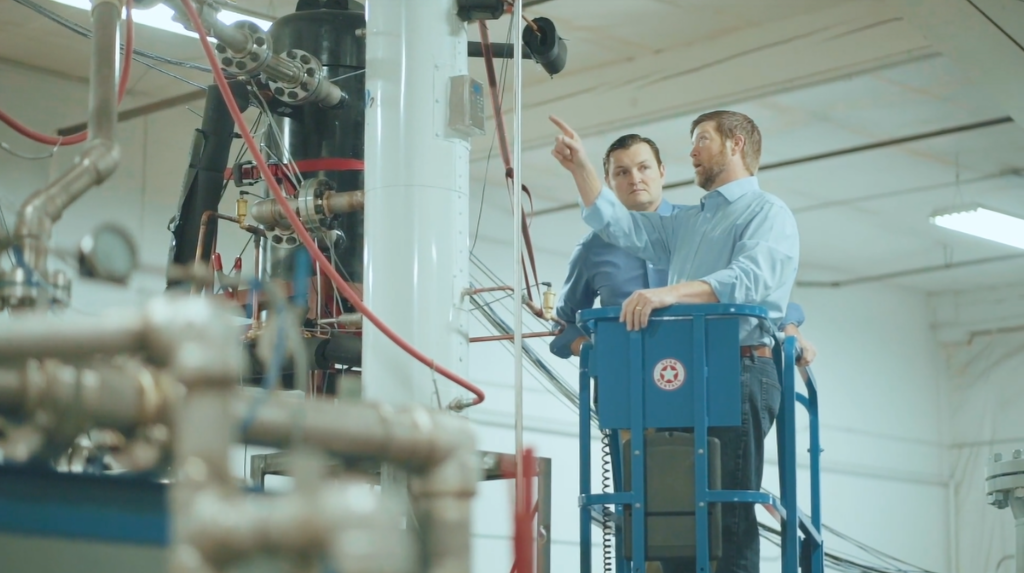
In 2019, he hired Ted Schmidt of ActionCoach Northwest to help him develop the foundations of the business. Schmidt said that early on, Johnston was working out of his basement by himself and was focused on building, growing, and expanding the company into a multimillion-dollar business. Schmidt described him as a visionary, a strong leader, very intelligent, and very driven.
Today, Johnston has a team of 23 employees, including a business partner. He credits much of his growth to Schmidt’s guidance, but Schmidt said they began by building a foundation so the business could scale. Like most small business owners, they wear every hat in the company, and Johnston was no different. Schmidt encouraged him to leverage staff and their skills, and to delegate to others, working on the business rather than in it. He added that the focus started with fundamentals and then shifted to growth.
Johnston Engineering’s industry focus is primarily on energy generation and storage, CO2, H2, and critical minerals — a significant share of their business is with the Department of Energy (DOE), much of it applicable to technologies that form the backbone of the defense market.
While Johnston spent the first 11 years of his career working on military components, he admitted that Johnston Engineering is not as well known in the commercial aerospace market. However, he hopes to build awareness regarding their services in the aerospace industry. He said their sweet spot is engineering special projects for companies that may have engineering capabilities but not the time to invest in new technologies. He said, “We have the ability to help them go fast; we can fit into existing companies, take on individual projects, try a new technology where they don’t have engineers or structural analysis.” He said they can take on thermal or fluid flow, aerospace and defense thermal management, custom components, and design ground-up refrigeration/compression systems. Johnston Engineering is ISO 9001 compliant. They have recently implemented a Quality Management System (QMS) in accordance with the requirements of ISO 9001.
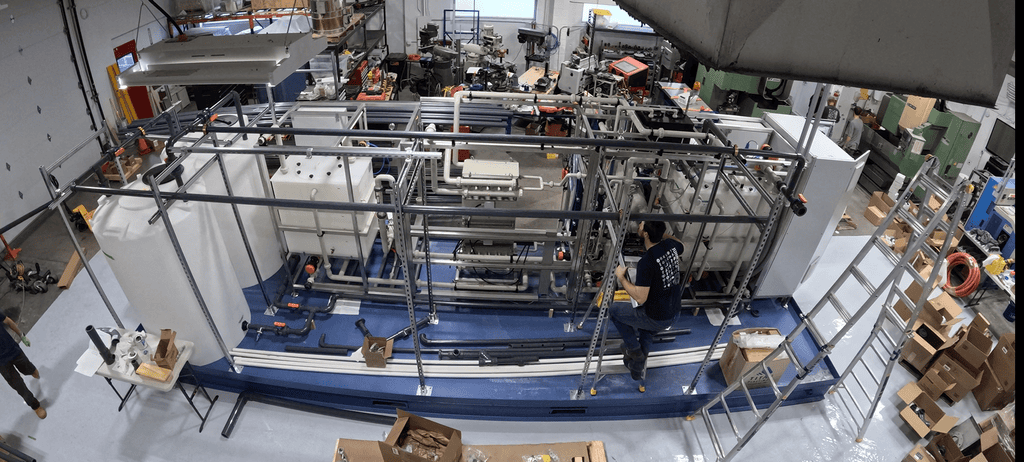
Business Development Manager Austin Stone has been with the company for four years. Stone said their competitive advantage is immersion in research and development. He added that they specialize in first-of-a-kind hardware and new systems, from experimental proof-of-concept in the lab to commercial deployment. He said they use advanced design and simulation tools, as well as prototyping. They are experts in thermal, structural, and fluid dynamics. Not only do they design, analyze, build, and test the systems, but the same engineers also do the initial work through the entire project. He said that with project-focused engineers who both start and finish tasks, there is better communication, faster problem solving, and better outcomes.
Stone said hiring is strategic and that they intentionally hire engineers who can both design and build. They physically build and test the systems they design. They develop engineers to become better at building the systems they create and to develop strong analytical capabilities. They design to make solving challenging problems faster and more cost-effective.
Alex Grudovik, director at Johnston Engineering, has been with the company six years and is also a co-owner of the business. Grudovik said many companies have ideas for hardware development and inventions but are not adept at testing their theories and taking products to market. He said, “Johnston Engineering excels in manufacturable, testable products — bridging the gap between structural analysis and follow-up fabrication, assembly, and testing.” For businesses with a grand idea that don’t know how to start, he shared that Johnston Engineering can become a long-term engineering partner to design and prototype the product, and then work to evolve it as testing occurs. He said the greatest compliment they receive is calls for increasingly challenging engineering projects.
Johnston said they can work to Technology Readiness Level (TRL) 8, which in the aerospace world, and specifically at NASA, means that system testing is completed and qualified. That is design, analysis, build, and test. But he said they work across TLR 3-8, beginning with the design of custom 3D parts via CAD, then analyzing how those parts fit into a complex system they can model. He added that before the product is even built, they can do analysis at the appropriate stage: structural strength, thermal temperature, fluid flow, fluid interactions, pressure drop, fluid distribution, and measurement.
Johnston takes pride in supporting 23 families through this business. He notes that he counts on employees not only for their education and skill level but also for project ownership. He said the culture is based upon integrity, ownership and accountability, continual improvement, and always doing your best work. He expects honesty and ethics in their designs and business practices. He ultimately wants his business to have a tremendous impact in the region and nationally. He cites the need to learn from others and about all types of engineering. Johnston himself continues to invest in the business and in his own business acumen by having served as an adjunct engineering professor at Gonzaga University for 13 years and on numerous community boards and non-profits.
Their new building was created as a greenfield construction project and is 11,400 square feet. He expects to fill it. He said he and his wife also do real estate development in their spare time. In creating this new facility, Johnston said others in the construction industry obtain work, a side benefit of creating a new facility for employees.
Johnston Engineering has come far with its new building, and it is an impressive facility. Being very forward-minded, it is built for growth, expansion, and scaling. Johnston is driven and solutions-focused, which has translated into a burgeoning business which provides work and engineering solutions not only for the region, but nationwide.
Johnston Engineering Services
- Mechanical Engineering
- Thermal Finite Element Analysis FEA)
- Computational Fluid Dynamics
- Structural Finite Element Analysis (FEA)
- Prototyping & Scale-Up
- Product & System Development